Get accurate driver assistance performance fast with manufacturer procedure based calibration, scan verified completion, and clear upfront pricing.
ADAS calibration recalibrates vehicle cameras and radar sensors after repairs that can change sensor position, viewing angle, or vehicle geometry. Calibration aligns the system to manufacturer specifications so features like lane keeping assist, automatic emergency braking, adaptive cruise control, and forward collision warning operate with correct sensor accuracy.
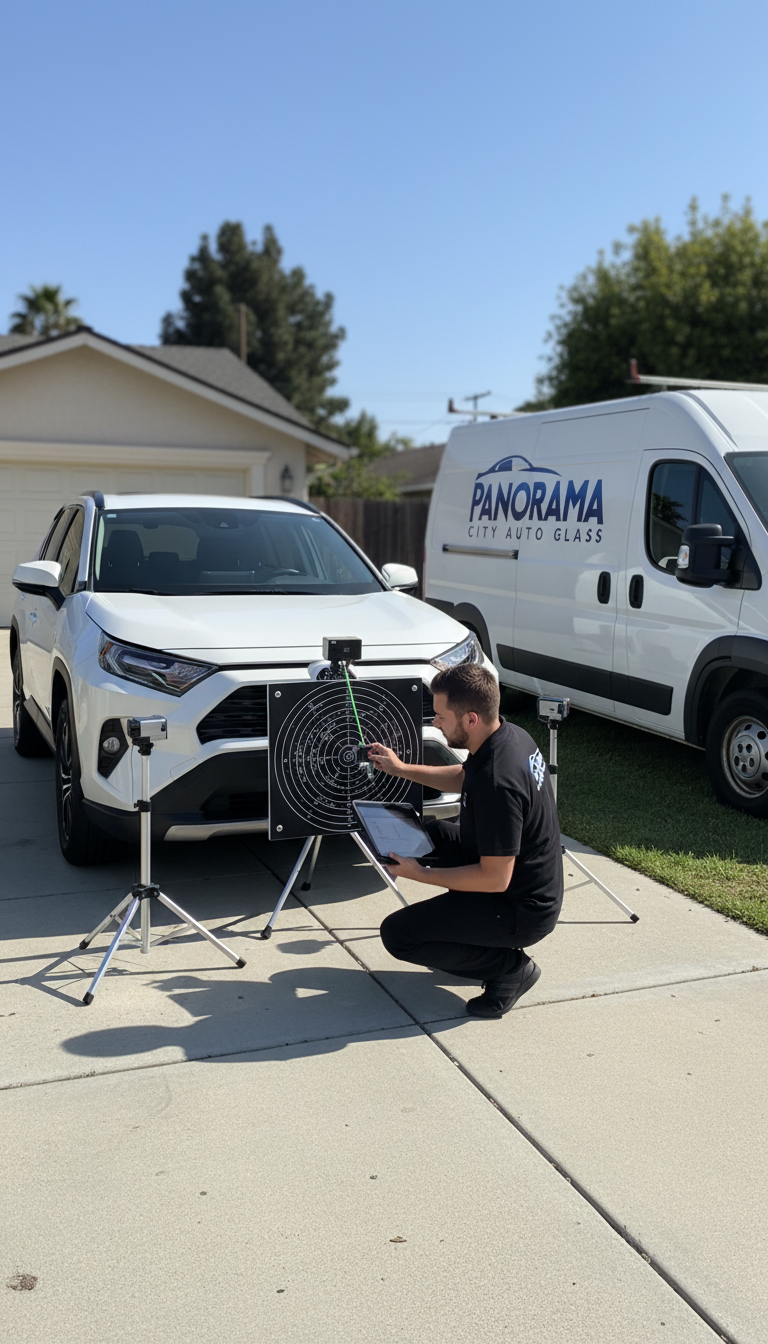
Panorama City Auto Glass performs ADAS calibration using OEM compatible scan tools, required calibration targets, and a pre service and post service scan workflow to confirm completion status. Trained technicians verify sensor mounting position, check for calibration blocking fault codes, and follow the required procedure path for the vehicle and installed ADAS system configuration.
Calibration is commonly required after repairs that affect the camera mount, radar mount, bumper structure, windshield mounting, or vehicle alignment angles. Many vehicles also require calibration after module programming or sensor replacement.
Windshield replacement with a forward facing camera mount, camera removal and reinstall, camera bracket movement, and camera module replacement.
Radar sensor replacement, changes in radar mounting position, or bumper or grille repairs that affect sensor aiming.
ADAS warning lights, feature-disabled messages, and new DTCs related to camera or radar aiming, calibration, or sensor alignment.
Different vehicles require different calibration methods based on the manufacturer's procedure. Some vehicles require one method, others require both.
Static calibration uses a target based procedure to align the camera or radar aiming to specification.
Dynamic calibration uses a defined drive validation procedure when the manufacturer requires real road conditions for confirmation.
The process follows a verification first workflow, so results are confirmed with system status checks. Steps and outcomes are based on the vehicle and the ADAS system configuration.
A scan identifies active DTCs, confirms module communication, and records current ADAS status before calibration begins.
Calibration requirements are matched to the vehicle and the installed camera and radar systems, and then the required method is selected.
Calibration is completed using the required method, followed by a post calibration scan to confirm completion status and remaining faults.
Calibration accuracy depends on vehicle condition and correct sensor mounting geometry. If a condition blocks completion, the reason is identified before proceeding.
Wheel alignment status, tire pressure, and ride height must be within specification for many calibration procedures.
Camera and radar mounting positions must be correct, and the sensor field of view must be unobstructed for reliable results.
Completion is confirmed through scan verification and procedure status. A clear outcome is provided, so the next step is straightforward.
Post calibration results confirm whether the calibration completed successfully and whether related DTCs remain present.
A completion report is provided that reflects the calibration method performed and the verification outcome.
Time varies by vehicle requirements, number of systems, and readiness conditions. A realistic time window is set after the vehicle and system requirements are confirmed.
Static calibration often fits within 60 to 120 minutes after readiness requirements are met. Dynamic calibration often fits within 90 to 180 minutes, depending on the manufacturer's drive conditions.
Multiple systems requiring calibration, manufacturer procedure length, persistent DTCs, alignment related readiness issues, and sensor mounting problems.
ADAS calibration is required after windshield replacement when a forward facing camera is removed, remounted, or its viewing angle changes. Calibration restores proper sensor alignment and ensures accurate driver assistance system performance.
The main difference between clearing codes and completing calibration is function and outcome. Clearing codes removes stored fault alerts. Calibration follows a manufacturer's procedure to verify sensor aiming, system accuracy, and successful completion status.
Calibration fails to complete when alignment is incorrect, sensors are mounted improperly, tire pressure or ride height is out of specification, sensor view is obstructed, or fault codes remain active. These conditions block successful calibration procedures.
Camera and radar systems require different calibration procedures based on sensor type and vehicle configuration. Camera calibration uses visual targets, while radar calibration uses alignment and distance measurements defined by manufacturer requirements.
Booking is fastest when vehicle details and the repair reason are available up front. A quick intake reduces delays and confirms the correct procedure on arrival.
Vehicle year, make, model, repair reason such as windshield replacement or collision repair, warning lights present, yes or no, driver assistance features currently disabled if known, preferred appointment time, best contact method, VIN optional.
ADAS Calibration service is available throughout Panorama City and nearby San Fernando Valley areas.