Stop broken glass exposure fast with precision fit, safety grade glass, and clear written pricing.
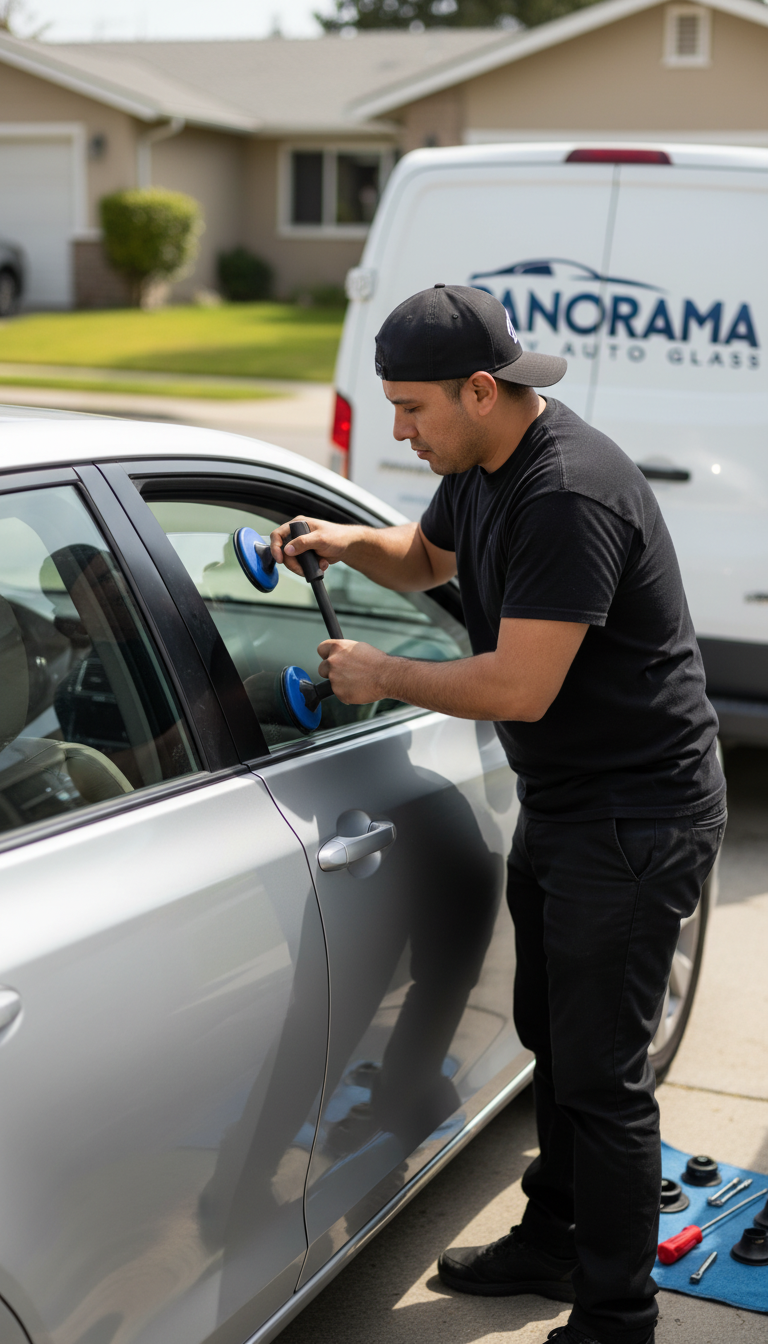
Car window replacement focuses on side and rear glass positions such as door glass, vent glass, quarter glass, and rear window glass. Panorama City Auto Glass matches the correct safety glass to the original specification, then installs it with attention to channel contact, perimeter sealing, and trim alignment. Closeout includes window movement verification and cabin cleanup for a professional finish.
Broken side or rear glass needs a tight seal, stable fit, and normal window operation. Quotes are built around the window position and the original glass specification.
Restores smooth window movement and secure sealing for daily driving.
Correct rear glass fitment helps maintain visibility, weather protection, and safety.
Matching the original glass specification supports durability and long-term performance.
Car window replacement covers common break points like door glass replacement, vent glass replacement, quarter glass replacement, and rear window replacement.
Matching the correct safety glass and confirming sealing surfaces supports comfort, security, and long term durability.
Window position determines glass shape, mounting points, and sealing surfaces. Sharing the exact position helps confirm the correct part and reduces delays.
Year, make, model, and window position are the fastest inputs for a quote.
Door glass replacement restores the main moving glass inside the door. Fit depends on the glass run channel, weatherstrip contact, and belt molding alignment along the sweep line.
Verification focuses on contour match, thickness match, smooth travel, and stable seating in the channel. Window regulator interaction and switch operation behavior are checked so the window closes fully and seals evenly.
Vent glass replacement applies to the smaller panel near the front corner of the door area on many vehicles. Clean trim fit and consistent seal contact matter most because airflow is concentrated near that area.
Glass clips retention, weatherstrip contact, and wind noise behavior are reviewed after installation so the panel sits flush and stays quiet.
Quarter glass replacement restores the rear side glass that is often fixed in place. Alignment across body lines and trim edges matters because the panel frames the cabin and sits near key water paths.
Belt molding seating, perimeter seal contact, and water leak check results support a tight finish and stable fit.
Rear window replacement and back glass replacement restore the main rear glass. Many vehicles use defroster lines, defroster connectors, or an antenna embedded in rear glass, so connection points matter along with perimeter sealing.
Edge seating, perimeter seal contact, defroster connector seating, and wind noise behavior are reviewed as part of closeout.
Safety glass type depends on the original glazing specification for the window position. Correct matching supports proper break pattern behavior and consistent fit.
Automotive glass is commonly tempered safety glass for many side and rear positions, with laminated safety glass used in select side positions on some vehicles.
DOT marking, FMVSS 205 glazing compliance, and ANSI Z26.1 glazing classification are confirmed on the installed glass where applicable.
Matching thickness and curvature helps maintain smooth operation and clean sealing surfaces.
Comfort and protection come from the way the glass sits in channels and seals against weather surfaces. Small alignment issues can lead to wind noise, water intrusion, or rattles.
Inspection focuses on channel seating, trim fit, and consistent seal contact around the perimeter.
Glass run channel engagement is reviewed along the travel path. Weatherstrip contact and compression points are checked for consistent seal contact.
Belt molding, seating, and trim alignment are reviewed so the sweep line stays tight and the glass edge sits correctly.
The wind noise check is used to confirm that the seal holds under airflow. The water leak check is used to confirm perimeter sealing at critical edges.
These checks support a quiet cabin and reduce the chance of moisture intrusion after car window replacement.
A replaced window should move smoothly and close to a consistent seal line. Operation verification confirms normal behavior under power and proper closing pressure.
Verification is framed around movement quality, closing alignment, and safety behavior when equipped.
Window regulator behavior is reviewed through full travel for stability and alignment. Window motor response is reviewed for smooth motion and consistent speed.
Switch operation check is reviewed from the driver control and door control when equipped.
Pinch protection behavior is reviewed on vehicles equipped with that safety feature. Closing response and reversal behavior are checked so the window behaves normally.
Broken glass can leave micro fragments in seats, mats, and door cavities. Interior protection and cleanup support a safe, comfortable return to daily driving.
Cleanup focuses on visible glass, hidden glass, and touch surfaces near the work area.
Interior surfaces near the work area are protected to reduce contamination and prevent trim scuffs. Door cavity areas are managed to limit glass migration.
Glass cleanup and vacuum focuses on seats, mats, and common fragment traps. Door cavity cleanup targets areas where fragments collect.
Final wipe down focuses on touch surfaces and immediate cabin comfort after replacement.
Car window replacement covers side and rear glass positions, including door glass, vent glass, quarter glass, and rear window glass. Technicians confirm window position to match the correct shape, mounting points, and fitment requirements.
Side window glass is typically tempered safety glass because it breaks into small fragments on impact. Some vehicles use laminated safety glass in select positions. Glass type is matched to the original factory specification for each window position.
Door glass replacement differs because the glass moves within a run channel and seals against weatherstrips. Proper fit requires stable travel, correct alignment with belt molding, and smooth switch operation after installation.
Rear window replacement supports defroster features when the vehicle uses integrated defroster lines. Technicians verify connector seating and electrical connections during installation to ensure proper defroster function after replacement.
Mobile auto glass service is available throughout Panorama City and nearby San Fernando Valley areas for windshield repair, replacement, side window replacement, and more.