Get smooth window movement and secure sealing fast with precise diagnosis, OEM grade parts options, and clear written pricing.
Window regulator repair corrects the mechanism that lifts and lowers door glass when a window sticks, drops into the door, tilts during travel, moves slowly, or makes a grinding and clicking noise. The work targets the regulator assembly, regulator motor output, switch signal, tracks, guides, wiring, connectors, and glass alignment so that window movement stays stable under load.
Panorama City Auto Glass confirms the fault with system testing and component inspection, then matches parts by year, make, model, trim, door position, and side. Final verification includes straight travel, stable seating at full close, and feature checks for one touch and anti pinch when equipped.

Power window problems often start as slow travel or a slight tilt, then progress into a stuck window or a drop into the door. Accurate diagnosis prevents wrong parts and repeated failures.
Provide year, make, model, trim, door position, and side, plus what the window does during operation. Details like intermittent response, motor sound, tilt, or grinding help narrow the fault quickly.
Parts are matched by trim, door position, side, connector type, mounting pattern, and regulator design so the glass tracks straight and seats correctly at the top seal.
Many power window complaints share similar symptoms across different failures. Symptom patterns help confirm whether the issue is mechanical, electrical, or alignment related.
Window stuck up or stuck down. The window moves slowly, stops mid travel, or tilts during travel. Grinding, clicking, or creaking noise while operating. Glass drops into the door. Motor sound with little or no movement. Intermittent response from the master switch or door switch.
A tilted or unstable window can strain the regulator motor, wear guides and tracks faster, and compromise sealing at the top edge.
Power windows operate as a system. Correct repair depends on identifying the failing component and confirming glass alignment.
Regulator designs commonly use a cable and pulley system, a scissor mechanism, or a rack and pinion mechanism. Mechanical wear can cause uneven lift, binding, sudden drops, or skipping under load.
Weak motor output can show up as slow movement, intermittent stops, or inconsistent operation under load. Some failures present as short bursts of operation followed by stoppage until the motor cools.
Switch signal faults can mimic regulator failure. Common patterns include one direction failure, inconsistent response, or operation from one switch but not the other.
Track alignment and guide wear affect glass stability. Misalignment can cause tilt, scraping noise, binding, rattles, and poor top seal contact.
Loose connectors, damaged wiring, and power delivery faults can cause intermittent operation, weak motor performance, or total failure.
Correct regulator movement still needs correct glass seating. Alignment affects straight travel, stability at full close, sealing, and noise control.
A structured diagnosis prevents unnecessary parts replacement. Work is verified by smooth travel, stable alignment, and correct seating.
Diagnosis checks the regulator's mechanical condition, motor output under load, switch signal behavior, power delivery, and track alignment.
Access work maintains hardware and clip integrity so the door panel fit remains solid and rattles are avoided.
Repair applies when the mechanism remains structurally sound, and correction restores stable travel. Replacement applies when the mechanism shows damage that will not hold reliably.
Testing verifies up and down travel, smooth movement under load, and feature behavior such as one touch and anti pinch when equipped. Final checks confirm glass seating at the top seal and stable alignment through full travel.
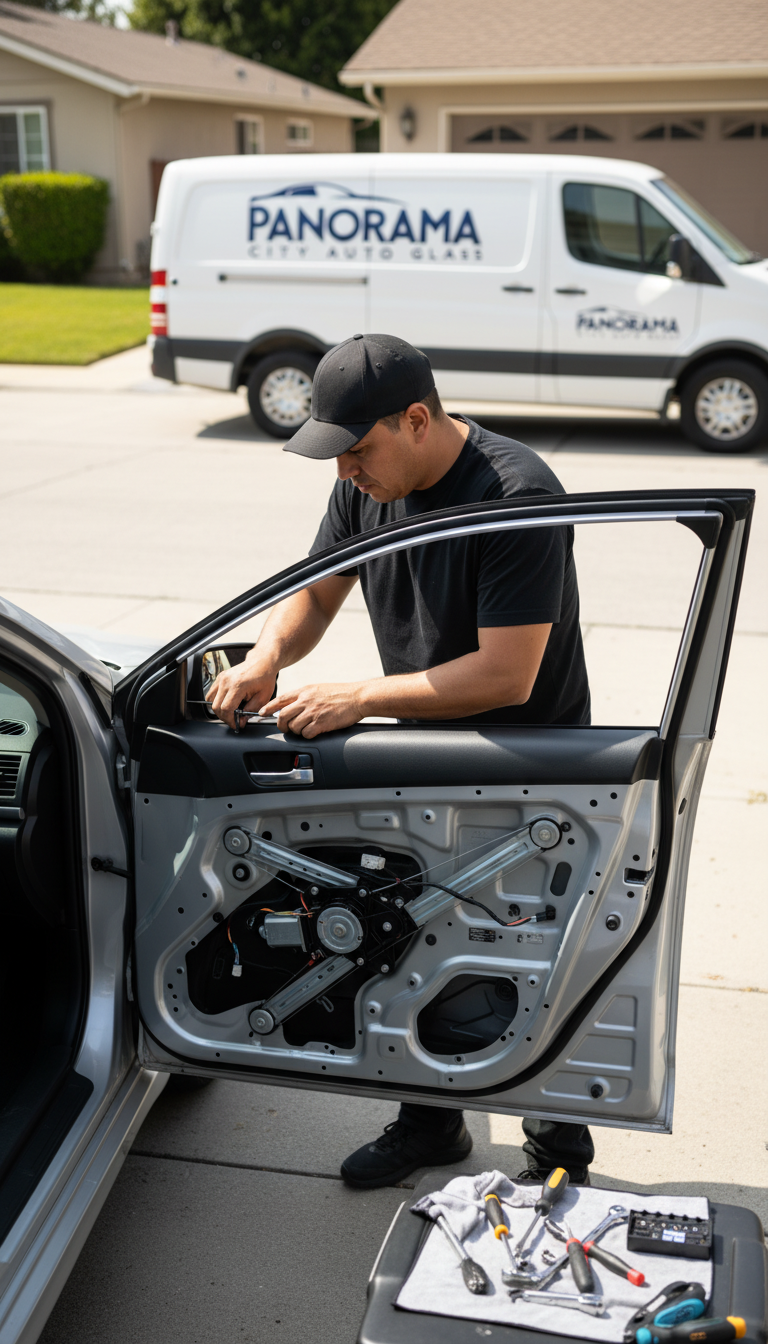
The correct fix depends on durability, not the lowest short term change. Clear criteria reduce repeat failures.
Track alignment faults that cause tilt or binding. Guide wear that can be corrected to restore stable travel. Attachment or mounting issues where the regulator assembly remains structurally sound.
Frayed cable, pulley failure, tension loss, bent scissor arms, broken pivots, worn joints, stripped rack engagement, skipping under load, broken mounting points, or repeated failure patterns.
Weak output, inconsistent operation, excessive noise under load, or intermittent performance tied to motor strain or thermal behavior.
Correct fitment prevents wrong parts and supports factory level operation. Fitment control also supports stable alignment and long term reliability.
Parts selection can follow OEM specification parts or premium aftermarket parts based on availability and preference.
Year, make, model, trim, door position, side, regulator design type, connector type, mounting pattern, and motor configuration.
Vehicles equipped with one touch and anti pinch need correct component compatibility for proper operation after repair.
Window regulator repair cost varies based on vehicle configuration, component selection, and supporting corrections needed for stable travel.
Year, make, model, trim, door position, side, and regulator design type affect parts and labor complexity.
Regulator only versus regulator plus motor. Switch signal and power delivery corrections when testing shows electrical faults.
Track and guide wear, glass seating corrections, missing hardware, damaged clips, and prior failed repair conditions can change the scope.
Identify regulator failure when the motor runs but the window does not move, often due to cable, attachment, or alignment issues. Identify motor failure when movement is slow, stops mid travel, or operates intermittently due to weak output or electrical faults. Diagnosis confirms the exact cause.
Repair a window that fell into the door by replacing or correcting the regulator assembly or attachment points. Dropped glass indicates loss of support within the mechanism. Repair restores stable movement and proper seating through full travel.
A window tilts or binds due to track misalignment, guide wear, or regulator assembly wear. These issues disrupt smooth movement within the channel. Repair corrects alignment and restores straight travel and stable seating at full close.
Panorama City Auto Glass schedules window regulator repair based on accurate fitment and confirmed diagnosis. Send vehicle year, make, model, trim, which window, and the symptom pattern to receive an estimate and appointment options.
Vehicle configuration, symptom patterns, and regulator design details are reviewed before confirming repair options and scheduling availability.
Mobile auto glass service is available throughout Panorama City and nearby San Fernando Valley areas for windshield repair, replacement, side window replacement, and more.